How the WWW Was Won with Words Written by a Human
“As a writer, I am sensitive to Artificial Intelligence (AI) generated content because it has the potential to replace my job entirely. But, it won’t because Google won’t allow it. Google does not like it when you use AI to produce all of the content on your blogs and websites. And, it knows when you do.”
Those were my words and thoughts on the subject about two years ago. Things have changed a lot since then. AI is replacing content at an alarming rate. AI is more sophisticated than it used to be, and sadly, Google and other search engines seem to be ready to adapt to it.

With no real resistance from the writing community, the fear of being replaced by AI has turned into reality.
I must admit, I was totally against using AI in the beginning. Recently, I have actually found some practical uses for it and wanted to share those with you.
Writing is my passion. It doesn’t feel like work, and I do not need to use AI to write for me. In some ways, crafting my own material is my own little resistance. I have come to realize that some tools are useful if you want to make things go a bit smoother without losing credibility for your work.
It used to take me three to four hours to write a complete SEO content-rich article or blog. The text needed to be edited and verified for factual content, images and videos needed to be created and metadata added before it was uploaded. Yes, it took a little bit of time to complete. This made content expensive and allowed for some unsavoury means to obtain content.
AI has eliminated the need for cutting corners because it has made some of the tasks faster, such as grammar checking, image creation and “gap” fillers.
How does a writer stay authentic to their writing while using AI tools?
-They use grammar checkers to enhance, not replace, content. They craft most of the text themselves and let the tool modify it for grammatical errors, spelling and sentence structure.
-Google “suggests” that creators acknowledge the use of AI if most of the text was crafted using content writing tools. However, most blog platforms seem to have integrated these tools into their editors, suggesting that there will be no penalties for non-compliance. Only time will tell.
-Ask AI for suggestions or ideas to add to the content, but don’t ask it to create the text based on that idea for you. I am not saying that if you use a line suggestion, your article or blog will not be authentic. We borrow information and quotes often when crafting content, but just make sure it does not replace the entire content or main idea.
-Use AI to create images and videos to place in the content if you do not have any of your own. Doing this avoids copyright images, takes less than a few minutes and does not cost anything using software like Canva. Canva is my personal favourite, but that is a blog for another day.
-When creators need inspiration, they often use AI for story, headline and idea prompts. I find this helpful when I am writing about topics that are not in my wheelhouse. It helps me to focus and can often lead to other ideas that I had not considered.
The only way to ensure that AI does not replace you is by using it to enhance what you already do, just do it better. It is inevitable that at some point, many jobs will be replaced by sophisticated AI. You can slow down the horse by integrating it into your current tasks. In turn, you will become more familiar with AI, and maybe you will end up teaching others how to use it or even programming yourself to do what you want it to do.
We should not fear the process but rather embrace it. Imagine if words could literally talk. In the future, they just might do so. Why shouldn’t they be your words?
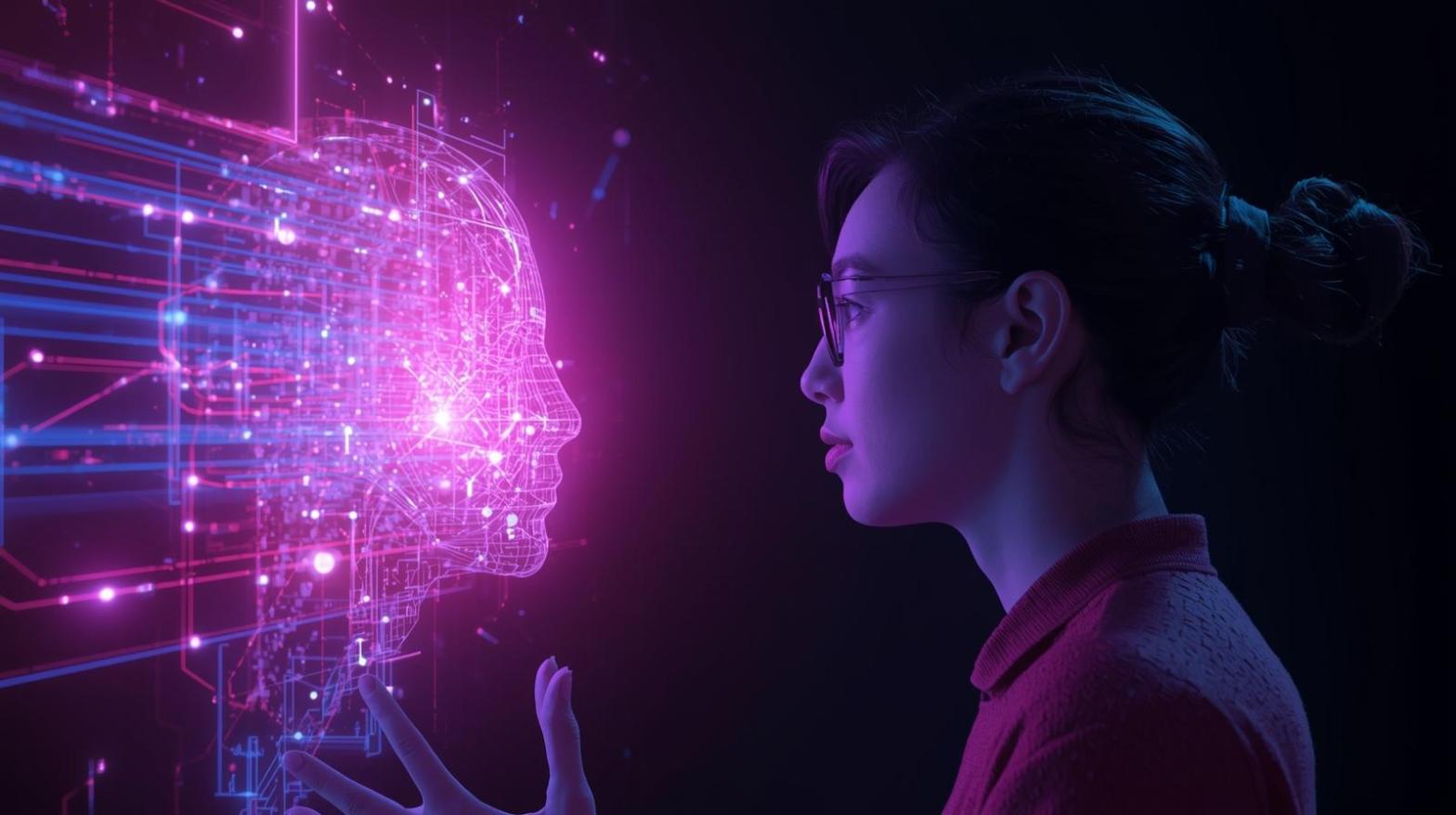
All of the images in this article were created using Artificial Intelligence, how cool is that?

 Madeline Foster
You must be logged in to post a comment.